
Know who's about to hire.
Before the job ad exists.
FirstFlag finds them. You call first.
Filings, funding rounds, planning trails and quieter sources, triangulated, verified and matched to your desks.
Scroll
Know who's about to hire. Before the job ad exists.
Filings, funding rounds, planning trails and quieter sources, triangulated, verified and matched to your desks.

One company. One flag.
Every signal the engine verifies becomes exactly one flag. Most never survive the checks.
One desk gets it.
A flag routes to the single member desk that owns the lane. No one else ever sees it.
Planted while it is still quiet.
The filing is public weeks before the job ad. The flag lands the same morning.
The unit FirstFlag deals in.
One company, verified, yours alone.
How a flag lands.
A flag is a brief, not a lead: the company, the money, the angle, who is already on the account. Verified, and routed to your desk alone.
The member view, demonstrated.
Claim your eight free flags
Flag 0847
Verified 06:41. Yours alone.
£6m Series A closed this week. First engineering hires expected within the month.
No agency on record. The first call wins the brief.
Fits the cyber desk, North of England. No agencies engaged. Filing linked, one click to the record.
Status
marked by your team
Each mark tunes next week's list to your desk.
From filing to first call.
01
A company files or announces
A raise closes, a filing lands, a lease is signed. The engine logs it the same day, weeks before any job ad.
02
The flag goes up
Cross-checked against every feed and who is already on the account. One desk gets it. Crowded accounts get dropped.
03
You call before the ad exists
The brief lands: the name, the money, the angle. Call it or email it. The channel is yours; the timing is ours.
The money is public weeks before the vacancy is. Whoever calls in between owns the account.
The money is public the day it lands. The job ads follow weeks later, crowded. FirstFlag works the gap.
One flag, taken apart.
A filing lands
An allotment of shares, lodged this morning. On its own it means nothing yet.
The engine cross-reads
Sector press, the funding wires, and who is already on the account.
The verification pass
A flag clears it or dies here. Most die here.
Routed to one desk
Yours. No other member ever sees it.
Four layers in. One name out. One desk gets it.
A database gets worse every time it is sold. A lane does not.
Or you could hire someone.
Every buyer runs that maths, so run it properly. A junior researcher costs a full salary before employer National Insurance, tools, desk space and the months they spend learning your patch. They read one source at a time, eight hours a day. Then they resign.
A lane reads every source, every day. It lands verified before your consultants sit down, it needs no managing, and it cannot be poached. Bring the researcher maths to the pricing conversation. We will happily put ours next to it.
The hours are the real price.
One lane's signals each week, method by method. Typical desk estimates.
FirstFlag
half an hour the brief is read in minutes
Watching the registers by hand
12 hours thousands of documents a day
Trade press and news sweeps
6 hours after the wires have it
Asking ChatGPT
5 hours then verifying what it made up
Lead database filtering
4 hours rows, not signals
Every hour above the amber line is an hour not spent placing.
Two ways to hold a lane.
Same flags, same exclusivity. The difference is who does the early work.
The lane
Flags land each morning. Your consultants make the first move; every mark sharpens next week's list.
The lane, worked
Flags land already moving. We run the outreach from your own brand: domains warmed in your name, sequences your MD signs off, meetings booked into Bullhorn, Vincere or JobAdder. Your consultants only take the meetings.
Either way the lane is yours alone, and pricing for either is the same conversation.
One desk per niche. That is the point.
If we sold cyber in the North to two agencies, the whole thing would be dead in a month. So we do not. Your lane is yours until you give it up.
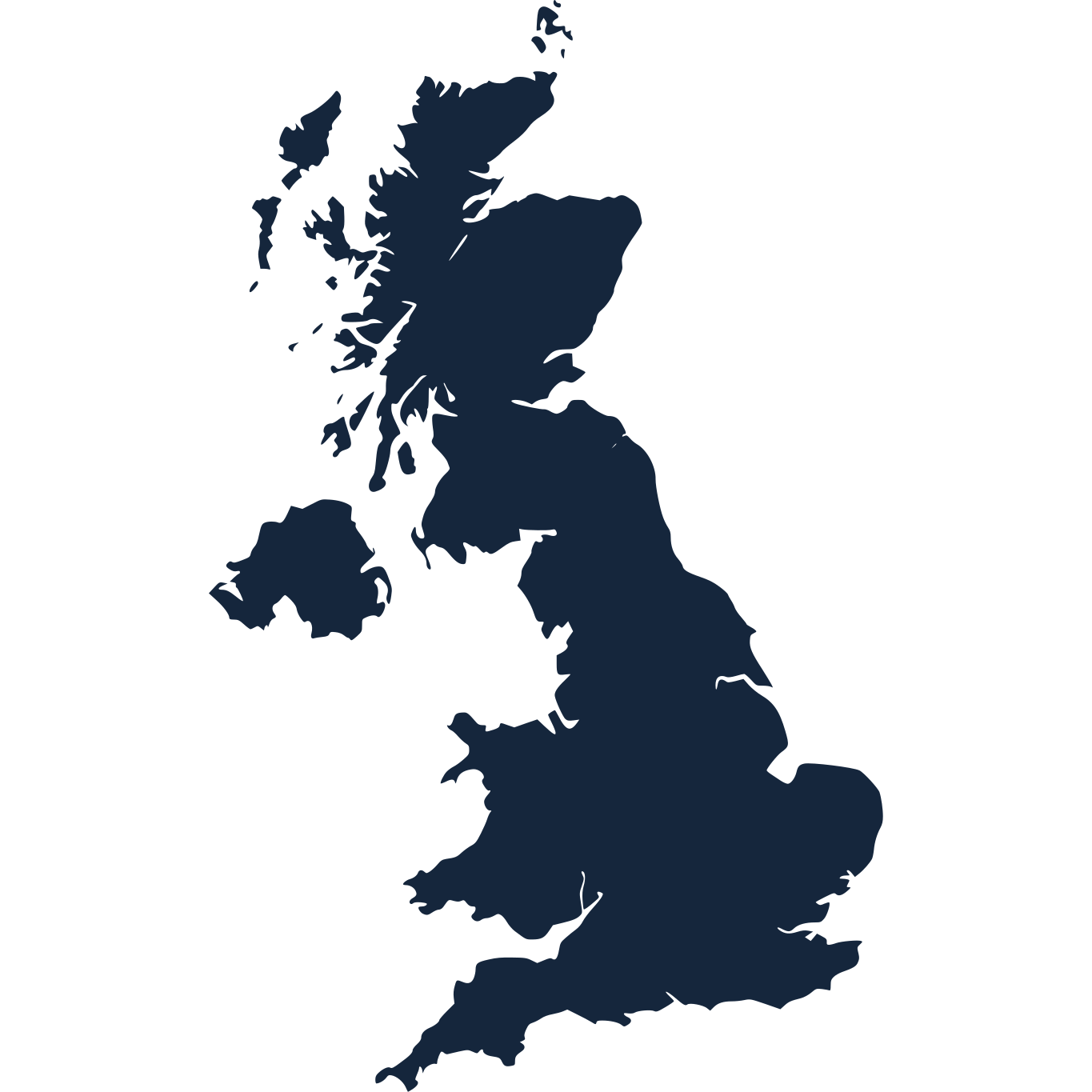
Lanes we have flagged in
- embeddedSouth West
- aiLondon
- biotechLondon
- cyberLondon
- biotechScotland
- embeddedYorkshire
- biotechLondon
- biotechSouth East
- biotechLondon
- aiMidlands
Names withheld. Each dot is a verified flag, anonymised to the region and niche of the lane that owns it.
One pin per territory. Planted once.
No flag dies unmatched.
The engine finds hiring in niches you do not run. Those flags route to the member whose desk fits, and the ones that fit you arrive the same way. Nobody competes; every blind side is covered.
Cyber
North
Fintech
London
Life sciences
Cambridge
Engineering
Scotland
Eight companies nobody has touched beat two hundred everyone is calling.
Desk maths, not a study: the first agency through the door gets the conversation. The two-hundredth gets the gatekeeper.
A short list, refreshed daily
5 to 15 companies most weeks. When 6 meet the bar, you see 6. The bar is the point.
Sources you cannot subscribe to
The engine triangulates sources you cannot buy a login for. Your lane is sold once, to you.
Recruiter-presence check
Every company checked for agencies already engaged, before you reach out.
The record, one click away
Each flag links to the public record behind it. Check us against the source.
Feedback that sharpens the list
Mark each company: reached, meeting booked, brief taken, placement. The engine learns your desks.
Called before the ad.
Names withheld. The dates do the talking.
A software company
£4m raise, flagged the day it closed. Engineering ads followed the same week.
3 days ahead
Next entry pending
The ledger grows as flags become public job ads. The gap is the product.
watching
FirstFlag is built and run by the operator whose engine sourced, wrote to and booked the firms it serves. If one of our emails brought you here, you have already watched it work.

Claim your eight free flags.
Eight is what one desk can work properly in a fortnight: verified companies, routed to your lane. One agency per lane at a time; if yours is on trial elsewhere, you join the queue. We reply within one working day.
When your lane goes live, we plant it properly: a FirstFlag pennant with your agency's name, shipped to your office.
What if my competitor signs up?
They cannot take yours. A lane is one desk per niche per region, sold once, first come. If the lane you want is held, join its waiting list or take the nearest open lane. The same lane is never sold twice.
Where do the signals come from?
Filings, funding announcements, expansion and planning trails, sector press, and a few feeds we keep to ourselves. The flag is the inference across all of them, verified before it reaches a desk.
Can't I just watch the public filings myself?
You could. Thousands of documents land every working day, and the signal is rarely in one of them. The engine reads around the clock and verifies every flag. Your consultants spend that time reaching out, not reading.
Is this another predictive-intelligence tool?
Those platforms sell the same feed to every subscriber; if you have tried one, you know why it stopped working. A lane is sold once, and every flag goes to one desk. The value is in what we refuse to sell twice.
Why is the list so short?
Because a desk can only work so many companies well in a week. Eight good names you reach first beat two hundred everyone already has.
We run on email more than phone. Does this still work?
Yes. A flag briefs whatever your desk runs: a call, a sequence, an introduction. Timing is the advantage either way.
What does it cost?
Pricing is a conversation about your desks and your patch. There is no public rate card. We reply within one working day.